
From Global Shock to Freight Reality
Understanding the 2026 Fuel Surge in Australia
Introduction
Australia’s freight and logistics sector is currently facing one of the fastest increases in fuel prices seen in years.
This isn’t a normal pricing cycle. It’s a rapid global shock that’s hitting local supply chains almost instantly, driven by international instability and amplified by domestic conditions.
For businesses that rely on transport and freight, understanding what’s happening and what comes next is critical.
What’s Driving the Fuel Price Surge?
A Global Supply Disruption
Global oil markets are under pressure due to escalating instability in the Middle East.
Up to 8 million barrels per day of supply has been impacted
Around 20% of the world’s oil supply flows through the Strait of Hormuz
Brent crude has surged above USD $100 per barrel
This is not a local issue. It’s a global supply disruption affecting every fuel dependent economy, including Australia.
Why Australia Is Especially Exposed
Structural Dependence on Imports
Australia’s fuel market is particularly vulnerable due to its reliance on imported fuel and long supply chains.
At the same time, demand has surged:
Some buyers are ordering 4 to 5 times their normal fuel volumes
The spot fuel market has effectively disappeared in the short term
Suppliers are prioritising contracted customers and existing networks
This creates a perfect storm:
Global supply pressure is colliding with rapid local demand.
How Global Events Impact Local Fuel Prices
Australia’s fuel system is globally connected but heavily dependent.
80 to 90% of diesel used in Australia is imported or refined from imported crude
Domestic refining capacity continues to decline
Diesel powers critical sectors, including:
Freight and transport
Mining and agriculture
Backup energy and infrastructure
Where Australia’s Fuel Comes From (And Why It Matters)
Australia sources most of its refined fuel from Asia, but those countries rely heavily on Middle Eastern crude.
This creates a supply chain dependency:
Middle East crude to Asian refineries to Australian fuel supply
So even without directly importing Middle Eastern oil, Australia is still heavily affected by disruptions in that region.
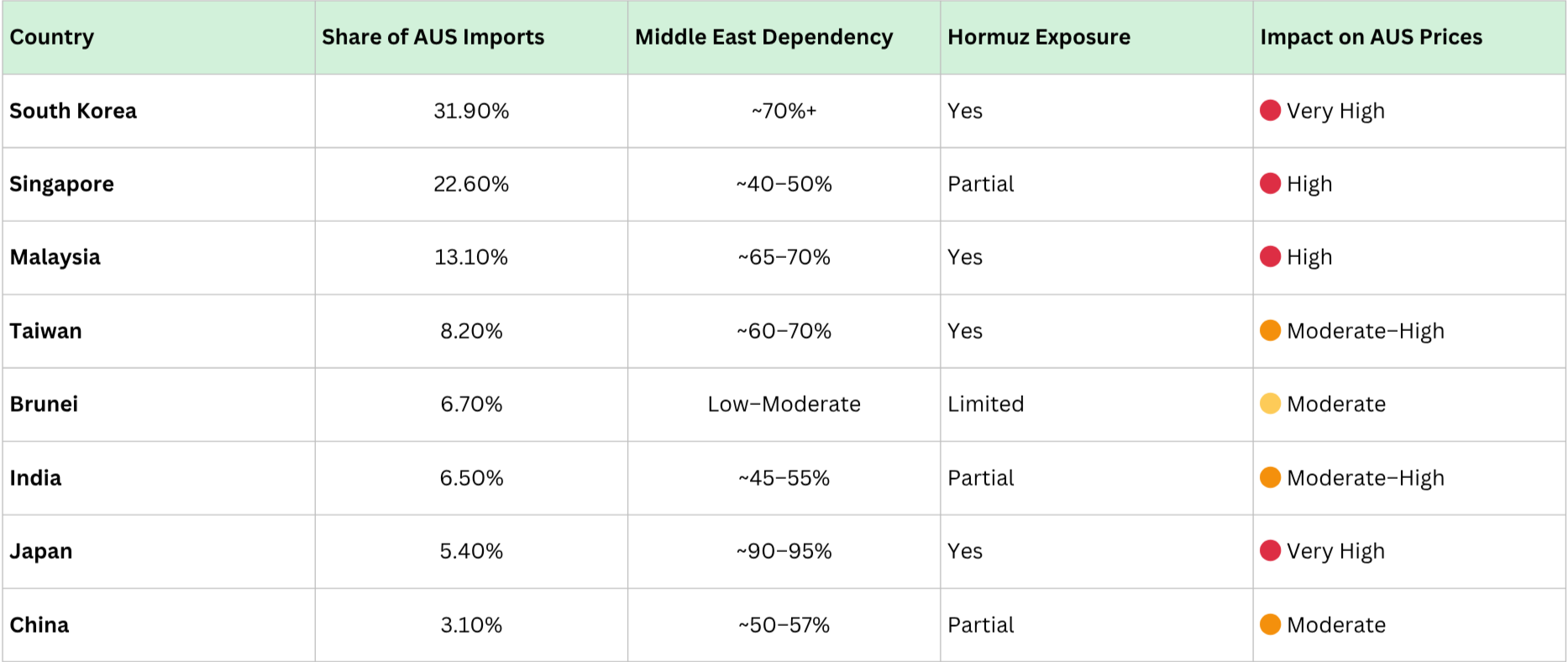
The Hidden Risk in Australia’s Fuel Supply Chain
A significant portion of global oil flows through the Strait of Hormuz into Asia, feeding the same refineries Australia depends on.
When disruption occurs:
Global oil supply tightens
Asian refining capacity is impacted
Fuel availability in Australia becomes constrained
Prices rise quickly
Demand Is Making the Situation Worse
Domestic behaviour is amplifying the issue:
Panic buying and stockpiling
Sudden spikes in demand across industries
Suppliers prioritising contracted customers
Early signs of rationing in parts of the market
This isn’t a simple fuel shortage. It’s extreme demand pressure on a constrained system.
Diesel Prices: A Rapid Shock to the System
The impact on diesel prices has been immediate:
Prices jumped from 173.7 cpl to 249.1 cpl
A 43.4% increase in just 8 days
This is not typical inflation. It’s a market shock event.
Impact on Freight and Logistics in Australia
The effects across the freight sector are already being felt:
Operating costs for carriers have increased sharply
Market conditions have shifted from stable to volatile
Capacity, pricing and delivery times are under pressure
Why Fuel Levies Are Necessary
Fuel levies are often misunderstood, but they are essential in times like this.
They:
Reflect real time fuel price movements
Protect transport operators from unsustainable losses
Help maintain service reliability across supply chains
Without fuel levies, many operators simply couldn’t continue operating under current conditions.
What This Means for Consumer Prices
According to industry insights:
Transport makes up 12 to 13% of the total product cost
Fuel is only a portion of that
So even with sharp diesel increases, the actual impact on retail prices is typically:
Around 3 to 5% increase for consumers
The Overlooked Factor: Government Revenue
Higher fuel prices also increase government revenue through:
GST, which rises with fuel prices
Inflation linked tax flows
Increased turnover across the economy
What Businesses Should Expect
Short Term 1 to 2 weeks
Continued price volatility
Elevated diesel costs
Pressure on freight capacity and delivery times
Medium Term 2 to 6 weeks
Prices likely to remain high
Possible stabilisation if demand eases
Long Term
Heavily dependent on global geopolitical developments
Navigating Freight Volatility: The Deliver Approach
At Deliver, we see this as more than just disruption. It’s a test of supply chain resilience.
Our focus is on:
Data driven fuel pricing alignment
Supporting carrier sustainability
Clear and transparent communication
Final Thought
Fuel volatility at this scale highlights a key reality:
The most resilient supply chains aren’t the cheapest. They’re the most adaptable.
At Deliver, we don’t just react to market changes.
We help businesses understand them, plan for them and stay ahead.